How to Choose Hotel Restaurant Furniture for Global Sourcing?
Choosing Hotel Restaurant Furniture for global sourcing involves more than comparing prices and attractive catalog images. A dining chair may look elegant online, yet feel unstable after hours of guest use. A marble-look tabletop may photograph beautifully, but its weight can increase shipping costs and installation time. This guide examines how hospitality buyers can evaluate furniture through durability, comfort, design, supplier capability, and total ownership cost.
Every sourcing decision should begin with the restaurant’s operating reality. Consider busy breakfast service, frequent cleaning, narrow corridors, humid climates, and different guest body types. Check frame construction, upholstery performance, edge protection, replacement parts, and packaging quality. Ask suppliers for material specifications, production samples, inspection records, and realistic lead times. Independent testing or professional verification can add confidence, especially when orders cross borders and involve multiple factories.
Details matter greatly.
A reliable supplier should communicate clearly about dimensions, tolerances, finishes, certifications, and delivery responsibilities. Buyers also need to review applicable safety, environmental, labeling, and import requirements in the destination market. These requirements vary, so professional local advice remains valuable. However, no checklist can predict every problem. A sample may perform well while a larger production batch reveals color variation or minor assembly issues. That possibility deserves attention. By combining practical hotel experience, documented quality controls, and careful supplier conversations, purchasing teams can create dining spaces that look refined and remain dependable under daily commercial pressure. The goal is not simply lower cost. It is sensible value over time.
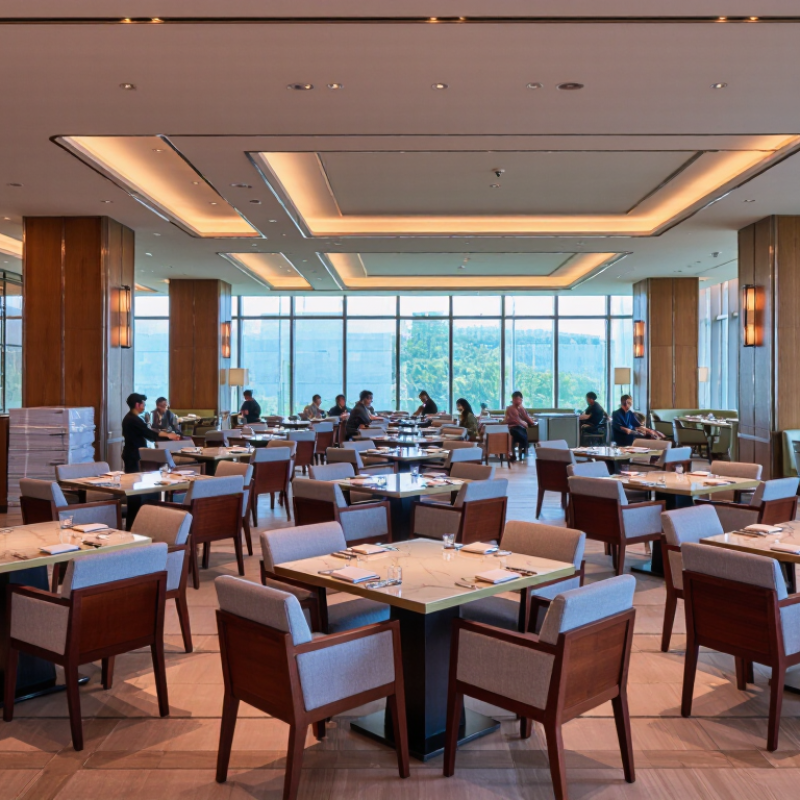
Define the Restaurant’s Furniture Needs and Operating Requirements
Before sourcing restaurant furniture, map how the room will actually be used.
A breakfast buffet needs clear serving lanes, while a quiet dining room may prioritize comfortable seating and conversation. Measure the floor plan, including service stations, door swings, and accessible routes. A table that fits on paper may block a server carrying two hot plates.
Record expected covers, peak service periods, and the number of daily seatings.
These details help determine table sizes, chair quantities, and how easily staff can rearrange the layout. Check materials against real conditions: frequent wiping, spills, sunlight, and chair movement all affect wear. Ask suppliers for specific finish and care information, not just broad claims about durability.
Small details matter.
Operating needs can vary by location and season.
Confirm local room dimensions, delivery access, assembly requirements, and whether replacement parts can be obtained reliably. If furniture will be used outdoors, assess exposure to rain and strong sun. Keep a practical allowance for breakage and changing layouts, but avoid ordering excess stock without a storage plan. It is easy to overestimate how often a space will be rearranged. Revisit the plan with restaurant staff before approving quantities; their daily workflow may reveal a tight corner or awkward chair that drawings missed.
Research Global Suppliers and Assess Their Capabilities
Research suppliers beyond their catalogs. Request factory addresses, recent hotel-project references, production capacity, lead times, and quality-control records. Then verify details through a live video audit or an independent inspection. Ask suppliers to show how they test chair joints, inspect welds, and protect table edges. A neat sample is useful, but it cannot prove consistent production. That part is easy to overlook.
The World Bank’s 2023 Logistics Performance Index compares 139 economies across six areas, including customs, infrastructure, and shipment timeliness. Use it to understand sourcing-region logistics, not to judge an individual factory. For each shortlisted supplier, check export experience, packaging methods, spare-parts availability, and how delays are communicated. Request a written quotation with materials, dimensions, finish, packing, and replacement terms clearly listed. Compare like with like. If a supplier avoids specific answers, treat that as a signal to investigate further.
Tips: Send the same specification sheet to every candidate. Include a close-up photo of the desired finish and a simple room layout. Order a pre-production sample, then inspect it under warm restaurant lighting. Small color differences can become obvious across a full dining room. Keep a little doubt; even a strong audit cannot guarantee every shipment will be perfect.
Verify Quality Standards, Compliance, Shipping, and Import Requirements
Global hotel restaurant furniture must withstand more than daily dining. Chairs move across tile, tables face spills, and outdoor pieces meet sun and rain. Ask suppliers for material specifications, test reports, and clear descriptions of how products were evaluated. Check load ratings, joint strength, finish durability, and fabric cleaning instructions. A polished sample can still hide weak construction. Inspect its underside and test it under realistic use.
Confirm that materials and finishes meet the requirements of the destination market. Request relevant certificates and verify that they cover the exact model, not just a similar product. Review restricted-substance declarations, fire-performance requirements, and labeling rules with your local compliance professional. Requirements vary by country and product type. Keep dated copies of documents and approved samples. This paperwork feels tedious, but missing details can delay customs clearance or installation. Even a careful review cannot catch every production variation.
Tips: Before ordering, confirm carton dimensions, packaging protection, shipping terms, and who handles import duties. Ask for a pre-shipment inspection and photograph packed goods. Leave time for port delays; schedules sometimes slip.
Compare Total Costs and Finalize the Sourcing Decision
When comparing hotel restaurant furniture suppliers, calculate landed cost per usable year, not just the quoted unit price. Include samples, packaging, freight, insurance, customs charges, local delivery, assembly, and spare parts. UNCTAD’s Review of Maritime Transport 2024 notes that maritime shipping carries over 80% of global trade by volume, making freight exposure a material part of many sourcing decisions. Request quotes using the same delivery terms and quantities. A low factory price can lose its appeal when a container arrives late or requires costly rehandling. Small details matter: a table’s packed dimensions, replacement glides, and whether chairs stack safely can change storage and labor costs.
Estimate service life using the restaurant’s actual conditions: daily turnover, cleaning chemicals, humidity, and chair movement. The U.S. Environmental Protection Agency reported that furniture and furnishings generated 12.1 million tons of municipal solid waste in 2018, illustrating the broader cost of premature disposal. That figure is not hotel-specific, so use it as context, not a forecast. Ask suppliers for material specifications, test documentation, warranty exclusions, and replacement-part availability. Then compare expected repair and replacement costs across the same planning period. Keep a buffer for damage and delays. It may not be perfect. Pilot a small order, inspect finishes after cleaning, and record assembly time before committing to a larger shipment.