

10 Collapsible Mess Kit Buying Tips for Global Buyers

Buying a Collapsible Mess Kit for international use requires more than comparing prices and product photos. Global buyers must examine materials, packing size, capacity, durability, and supplier reliability. A kit that looks compact online may occupy extra space after folding. Small details matter.

This guide presents ten practical buying tips based on common sourcing and outdoor-use considerations. Check whether the stainless steel, aluminum, silicone, or plastic components suit the intended environment. Confirm food-contact documentation, test reports, and quality-control records with the supplier. Requirements can differ between markets, so buyers should verify current import, labeling, and safety expectations locally. Do not rely on vague claims such as “premium quality.” Ask for measurements, product samples, carton dimensions, and clear photographs of hinges, handles, lids, and locking points. Request a sample before placing a large order. It often reveals awkward folding, loose parts, or uncomfortable edges.

Think about real use. Will the kit serve hikers, emergency teams, families, or promotional buyers? A lightweight bowl may be convenient, but it could deform under heat or rough handling. A sturdy kit may protect better, yet increase freight costs. There is no perfect specification. Even experienced buyers can overlook small issues when deadlines are tight. Recheck the details. Supplier communication also deserves attention. Reliable partners explain tolerances, production limits, replacement policies, and inspection procedures clearly. These tips will help buyers compare offers carefully, reduce avoidable surprises, and choose a Collapsible Mess Kit with practical value across different markets.
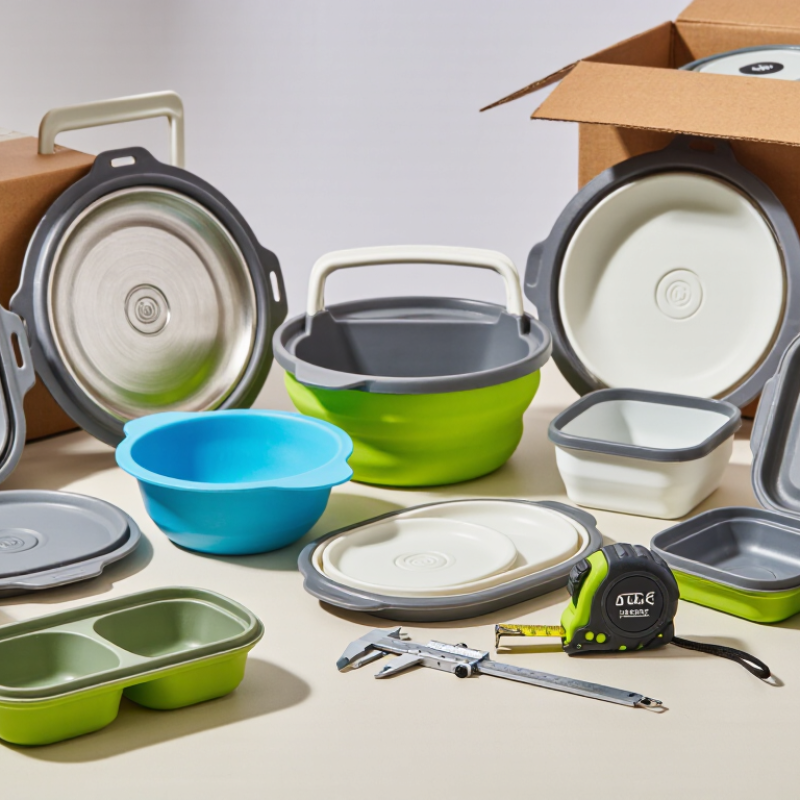
10 Collapsible Mess Kit Buying Tips for Global Buyers

Define Your Cooking Needs and Typical Travel Conditions

Before buying a collapsible mess kit, define how you actually cook outdoors. The U.S. Bureau of Economic Analysis reported that outdoor recreation generated $1.2 trillion in 2023. That large market hides very different habits, from boiling water at a roadside stop to preparing complete meals at a remote campsite. A solo hiker may need one cup, a spoon, and a small stove. A family traveler may need two bowls, a pan, and shared utensils. Write down your usual meal size first.

Your travel conditions matter just as much. For humid climates, inspect drainage, drying speed, and mold-resistant materials. Cold-weather users should check whether flexible components remain stable below freezing. In dusty regions, smooth surfaces are easier to clean than deep grooves. Air travel also rewards compact packing, but a thin container may fail under repeated compression. The 2024 KOA North American Camping Report recorded 57.8 million camping households in the United States and Canada in 2023. More campers mean more varied use cases, not one universal kit.

I once chose the smallest set available. It saved space but made cooking awkward. That mistake still influences my buying decisions. Test the folded size beside your stove, fuel, and water bottle. Check the open diameter with your hands, not only a specification sheet. Some measurements look generous online. They are not always practical. For international travel, verify local food-contact safety requirements and choose clearly documented materials.

Compare Materials, Weight, Capacity, and Collapsed Size

10 Collapsible Mess Kit Buying Tips for Global Buyers

Compare Materials, Weight, Capacity, and Collapsed Size

Material affects safety, durability, and cleaning effort. Food-grade silicone folds easily and resists many stains. Stainless steel handles heat better and usually survives rough campsite use. Some kits combine both materials for flexibility and structure. Check the stated temperature range, especially when using hot soup or boiling water. A vague material description deserves caution.

Weight matters during hiking, cycling, and air travel. A lightweight kit may reduce pack strain, but thinner parts can feel unstable. I once preferred the lightest bowl available. It flexed too much on uneven ground. That mistake changed my buying method. Compare the complete packed weight, including the lid, utensils, and storage pouch. Do not judge from the bowl alone. Every gram counts.

Capacity should match actual meals, not attractive product photos. A 500-milliliter bowl suits snacks or small portions. Larger meals may need 800 milliliters or more. Measure your usual serving at home. Collapsed size is equally important. Place the folded kit beside your backpack’s side pocket before purchasing. Look for secure lids, smooth edges, and joints without trapped food. Test whether the container opens easily with wet hands. A compact kit is useful only when it remains stable, cleanable, and practical in real conditions. Seal quality can vary. Inspect it carefully.

Check Folding Mechanisms, Stability, and Ease of Use

A collapsible mess kit should open smoothly, lock firmly, and pack without finger-pinching. I test the hinge with cold, wet hands. A neat folding joint can still wobble. Look for wide pivots, rounded edges, and a visible locking position. Spring-loaded parts deserve extra attention. They may feel strong in a showroom, yet loosen after repeated folding. The 2024 KOA North American Camping Report recorded 57.8 million camping households in 2023, showing how often portable cooking equipment faces repeated travel and setup.

Stability matters more than compactness. Place the assembled pot on a flat surface and press one rim gently. It should not rock or collapse. Check whether the handle stays aligned when the pot is full. A narrow base may save space, but it can become unstable on uneven ground. The U.S. Bureau of Economic Analysis reported that outdoor recreation contributed 639.5 billion dollars to the economy in 2023. That scale supports careful product testing, not rushed buying decisions. I would also inspect food-contact surfaces against applicable national requirements, because “stainless steel” alone says little about the complete product.

Ease of use appears in small details. Can the bowl separate with one hand? Do stacked parts remain quiet during transport? Are instructions clear without translation? Try folding the kit ten times before purchase, if possible. My own weak point is overvaluing clever hinges. Simplicity usually wins. Verify replacement parts, cleaning access, and packed dimensions. A slightly heavier kit may perform better when stability matters. Check twice.

10 Collapsible Mess Kit Buying Tips for Global Buyers - Check Folding Mechanisms, Stability, and Ease of Use

No. Buying Dimension What to Check Practical Benchmark Why It Matters Warning Signs Suitability
1 Folding Mechanism Open and close the handles, legs, or brackets repeatedly. Check whether moving parts align without scraping or pinching fingers. Complete operation should be smooth after at least 20 open-and-close cycles. A reliable mechanism reduces setup time and lowers the risk of failure during travel or outdoor use. Loose hinges, uneven movement, exposed pinch points, or parts that require excessive force. High Priority
2 Packed Size Measure the kit after folding, including handles, latches, and protruding fittings. A compact travel kit commonly fits within approximately 25–35 cm in its longest packed dimension. Smaller packed dimensions improve compatibility with backpacks, vehicle storage, and luggage. Marketing measurements exclude handles, lids, or protective cases. Space Saving
3 Stability on a Surface Place the assembled pot or pan on a flat surface and apply light pressure near each edge. The vessel should remain steady without rocking when tested on a level surface. Good stability helps prevent spills, especially when cooking with hot liquids or on uneven outdoor tables. Wobbling feet, narrow contact points, bent supports, or a base that twists under light pressure. Safety Essential
4 Handle Locking Confirm that folding handles lock in the cooking position and stay clear of hot surfaces. Handles should not fold unexpectedly when the empty vessel is lifted and gently tilted. A secure grip reduces the chance of dropping hot cookware and improves pouring control. Handles swing freely, become hot quickly, or release when the vessel is tilted. Safety Essential
5 Material and Heat Resistance Verify the cookware material, declared temperature limits, and compatibility with the intended heat source. Stainless steel and hard-anodized aluminum are commonly used for direct-heat cookware; silicone parts require a stated heat rating. Material selection affects durability, weight, heat distribution, and cleaning performance. No material grade, no heat limit, melting-prone plastic near the flame, or unclear food-contact information. Verify Documents
6 Base and Heat Distribution Inspect whether the base is flat and sufficiently rigid for the intended stove or burner. The base should sit flat before heating and should not visibly deform when warmed according to the instructions. A stable, even base improves cooking consistency and reduces localized scorching. Thin unsupported bases, visible dents, severe convexity, or poor contact with the burner. Cooking Performance
7 Capacity and Nesting Compare usable internal volume with the number of servings and check whether every component nests securely. For planning, allow roughly 0.75–1.0 L of cooking capacity per person for a simple one-pot meal. Correct capacity avoids overcrowding and helps buyers select a kit for solo, couple, or group use. Capacity is measured to the rim only, lids do not fit securely, or nested parts rattle excessively. Size Planning
8 Ease of Cleaning Look for smooth interiors, removable or protected fittings, and limited food traps around hinges and seams. The main cooking surfaces should be reachable with a standard cleaning sponge without specialized tools. Simple cleaning is important where water, time, or campsite facilities are limited. Deep crevices, porous surfaces, permanently trapped grease, or care instructions that require unusual equipment. Daily Usability
9 Weight and Load Balance Check the complete kit weight, not only the weight of the largest pot, and assess the balance when carried. Lightweight individual kits are often below 1 kg; larger multi-piece kits may weigh considerably more. Weight affects hiking comfort, shipping cost, and the safe handling of hot food. Unlisted accessory weight, a top-heavy design, sharp edges, or components that shift inside the packed kit. Compare Use Case
10 Instructions and Global Compliance Request clear care instructions, food-contact information, packaging details, and destination-market requirements. Instructions should state cleaning limits, heat-source compatibility, folding steps, and safe-use warnings in the target market language where required. Clear documentation supports safer use, smoother customs handling, and fewer customer-service issues. Untranslated warnings, missing material details, unsupported safety claims, or inconsistent dimensions across documents. Export Check

Evaluate Safety, Cleaning, Durability, and Included Accessories

For global buyers, safety starts with traceable materials, not attractive colors. Ask for food-contact documentation and a stated temperature range. Requirements vary by destination. Check whether the bowl, lid, and utensils use compatible materials. A strong chemical smell is a warning sign. Avoid kits with sharp mold edges, loose hinges, or lids that pop open when warm. Test the locking rim with one hand. It should close evenly, without forcing the flexible body.

Cleaning details often decide whether a kit remains usable. Inspect folds, corner joints, and utensil slots for trapped food. Smooth interiors rinse faster than deep textures. If dishwasher use is claimed, confirm the approved rack and temperature. Otherwise, repeated heat may warp the lid. I learned this after a lid stopped sealing. It looked clean, but dried sauce hid under the rim. Not ideal.

Durability needs more than a thick wall. Ask how many folding cycles were tested, including cold-weather testing. Flexible materials can stiffen outdoors and crack near hinges. Check the base for stable contact on uneven tables. Review included accessories carefully: a leak-resistant lid, spoon, divider, carry pouch, or cleaning brush can add real value. Extra clips may create more failure points. Compare replacement availability and clear care instructions. Suppliers should answer specific questions, not offer vague assurances. Inspect the first shipment, because samples and production runs can differ.

10 Collapsible Mess Kit Buying Tips for Global Buyers

Use the chart below as a brand-neutral purchasing framework. The percentages represent practical buyer-priority weights when comparing collapsible mess kits for safety, cleaning, durability, portability, and included accessories.

How to use it: Give the highest attention to food-contact safety, cleaning performance, structural durability, leak resistance, and heat resistance. Then compare packability, capacity, closure design, accessories, and the availability of replacement parts.

Verify Global Compatibility, Certifications, Price, and Warranty

Global buyers should check compatibility before comparing prices. Measure the folded kit, pot diameter, lid fit, and packed weight. Confirm whether the handle suits gas, induction, or open-fire cooking. Material declarations should identify stainless steel, aluminum, silicone, or coating grades clearly. Food-contact compliance may differ by destination. A European declaration does not automatically satisfy United States requirements. The ISO Survey 2022 recorded more than one million ISO 9001 certificates worldwide, but ISO 9001 verifies a management system, not product safety.

Tips: Request test reports, migration results, factory photographs, and batch numbers. Check whether an independent laboratory issued them. Certificates without laboratory details deserve caution. I would also test one sample before ordering hundreds. That small delay can expose loose hinges, sharp edges, or an unpleasant metallic smell.

Price comparisons must include shipping, import charges, replacement parts, and inspection fees. A low quote can become expensive after delivery. Ask for a written warranty covering broken locks, peeling surfaces, and unusable handles. Record the warranty period, claim process, response time, and return location. The OECD’s consumer policy guidance emphasizes clear information and effective remedies in cross-border purchases. Still, warranty wording is often vague. Ask practical questions: Who pays return freight? Are spare parts available for three years? What happens if only one component fails? A supplier that answers precisely is usually easier to assess, though not always perfect.

137 Seacoast Ave, New York, NY 10094
+1 (234) 466-9764
Excuisite food, unforgettable atmosphere...