

Outdoor living is no longer limited to a table, chairs, and a fixed roof. Homeowners now expect shade, airflow, lighting, and weather control from one adaptable structure. That expectation has pushed the Motorized Pergola from a luxury feature toward a practical outdoor investment. Yet convenience alone should not decide the purchase.
Industry research supports this shift. The Freedonia Group’s outdoor living products analysis identifies continued demand for residential outdoor improvements, driven by comfort, entertaining, and property upgrades. Houzz’s U.S. Houzz & Home Study also shows that homeowners continue investing in outdoor areas during renovation projects. These reports reveal a clear trend. People want exterior spaces that feel like usable rooms.
Still, market growth does not guarantee a suitable pergola for every home. A quiet motor, for example, means little if the posts cannot handle local wind exposure. A stylish louver system may disappoint when drainage is poorly planned. I have seen buyers focus on remote controls while overlooking installation access, electrical routing, and warranty coverage. That is an expensive mistake.
This guide examines ten practical Motorized Pergola tips buyers should consider before ordering. It covers dimensions, materials, motors, sensors, drainage, maintenance, installation, and long-term value. Each point connects product claims with real-world use. Check the details.
Manufacturers may describe performance differently. Independent verification remains important. Before signing a contract, compare load ratings, corrosion protection, operating temperatures, service terms, and replacement-part availability. A pergola should open smoothly on a calm afternoon and remain dependable after years of sun, rain, dust, and seasonal temperature changes. That standard matters more than impressive showroom lighting.
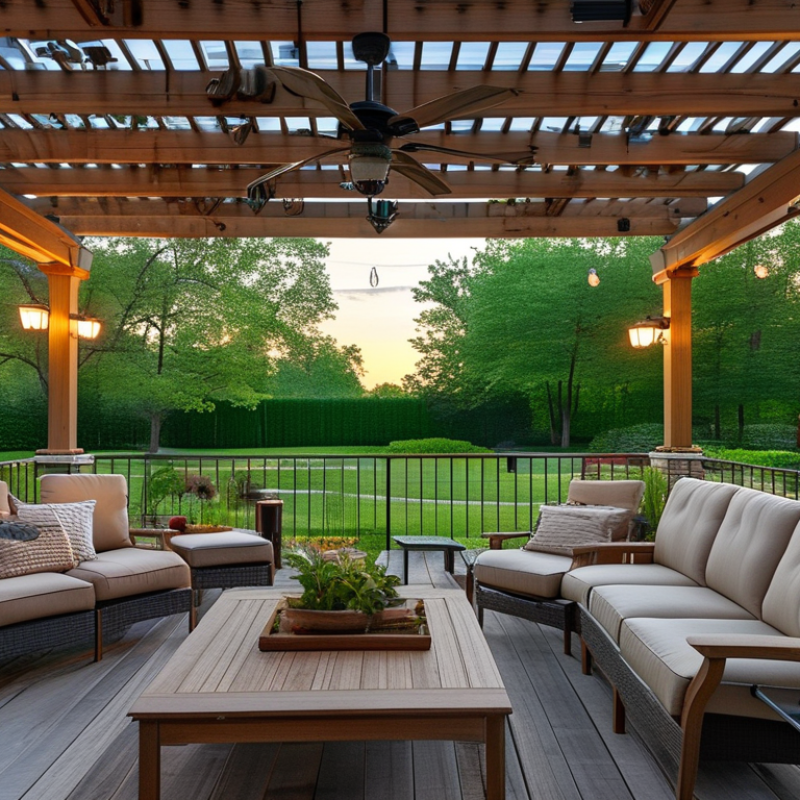
A motorized pergola can change an outdoor area within seconds. The main types include adjustable-louvered, retractable-fabric, and fixed-roof designs. Louvered models rotate aluminum slats to control sunlight and rain. Retractable fabric systems create a softer, lighter appearance. Fixed roofs offer stronger weather protection but provide less flexibility.
Look closely at the motor and control system. Quiet motors usually indicate better engineering and smoother daily operation. Wall switches, remote controls, and mobile controls offer different levels of convenience. Weather sensors can close the roof when rain begins. Useful, but not foolproof. Wind sensors may react too slowly during sudden gusts.
Drainage deserves careful attention. Water should move through internal gutters and exit away from furniture or walking areas. Ask about the structure’s tested wind resistance, coating quality, and corrosion protection. Coastal homes need especially durable materials. Installation also affects performance. Uneven posts can cause drainage problems and uneven louver movement. I have seen attractive systems perform poorly because the foundation was rushed. That mistake is expensive.
Measure the opening, nearby trees, and furniture before choosing a model. Leave enough clearance for moving slats and maintenance access. Check whether the power supply requires professional installation. Safety sensors, manual override options, and accessible replacement parts improve long-term reliability. A pergola should suit your climate, not just your patio photograph. Expect occasional cleaning and inspections. Even advanced systems need practical care.
| No. | Pergola Type | Key Feature to Evaluate | Typical Technical Facts | What Buyers Should Confirm |
|---|---|---|---|---|
| 1 | Motorized Louvered Pergola | Adjustable aluminum roof louvers | Louvers commonly rotate through approximately 90° to regulate sunlight, shade, and ventilation. When closed, the roof is designed to direct rain toward an integrated gutter system. | Ask for the louver rotation range, closed-roof drainage design, and whether the roof is intended for normal rain only or for more demanding weather conditions. |
| 2 | Retractable Fabric Pergola | Motor-driven fabric canopy | The canopy slides or rolls open and closed along tracks. Polyester and acrylic fabrics are commonly selected for UV resistance, while waterproof performance depends on the fabric coating, seams, and slope. | Check the fabric weight, UV rating, cleaning requirements, replacement procedure, and whether the canopy should be retracted during heavy rain, snow, or strong wind. |
| 3 | Retractable Hardtop Pergola | Motorized rigid roof panels | Rigid panels generally provide greater impact resistance and a more solid appearance than fabric, but they add structural weight and may require stronger posts, beams, and foundations. | Verify the frame load calculations, panel material, drainage path, maximum permitted opening position during wind, and local structural requirements. |
| 4 | Motor and Power System | Motor type, power source, and manual override | Most residential systems use low-voltage controls connected to a mains-powered transformer or a weather-protected electrical supply. A manual override or emergency release can be useful during power outages. | Confirm voltage, circuit requirements, outdoor electrical protection, motor noise level, expected operating cycle, and how the roof can be moved if power fails. |
| 5 | Control and Automation | Remote control, wall switch, app, and sensors | Common control options include handheld remotes, wired or wireless wall controls, smartphone apps, and integration with home automation systems. Wind and rain sensors can trigger automatic closure where supported. | Check whether controls work locally without internet, whether multiple zones can be operated separately, and whether sensors are included or sold as optional accessories. |
| 6 | Weather and Wind Protection | Wind resistance, rain management, and snow limitations | Weather ratings vary significantly by design, size, anchoring, and installation. A roof that is closed may handle rain effectively, but an open or partially open roof can experience different wind loads. | Request documented wind and snow limits for the complete installed structure, not only for the roof material. Confirm when the roof must be opened or closed for safety. |
| 7 | Frame and Surface Finish | Aluminum grade, corrosion protection, and coating quality | Powder-coated aluminum is widely used because it is relatively lightweight and resistant to rust. Coastal or high-humidity environments place greater demands on fasteners, drainage channels, and coating durability. | Confirm frame thickness, fastener material, coating specification, drainage-channel access, and whether the finish is suitable for coastal, snowy, or humid conditions. |
| 8 | Drainage and Water Control | Integrated gutters, downspouts, and roof pitch | Many louvered systems use hollow beams or concealed gutters to collect and route rainwater through posts. A level installation or blocked outlet can cause overflow and staining. | Inspect where water exits, whether downspouts can be hidden or connected to site drainage, and how gutters can be cleaned after installation. |
| 9 | Installation and Foundation | Anchoring, surface condition, and required clearances | A motorized pergola transfers wind and roof loads to its posts and anchors. Concrete slabs, decks, pavers, and soil may require different anchoring methods or reinforced footings. | Obtain a site-specific installation plan, verify post locations and overhead clearance, and determine whether permits, engineering calculations, or utility checks are required locally. |
| 10 | Maintenance, Safety, and Service | Routine care, pinch-point protection, and replacement access | Tracks, hinges, gutters, sensors, and moving parts need periodic inspection. Safety features may include obstacle detection, thermal motor protection, and controlled stop functions, depending on the system. | Review the maintenance schedule, spare-parts availability, service access to the motor and controls, safety shutoff behavior, and coverage terms for structure, finish, motor, fabric, and electronics. |